Rape as Genocidal Violence: Geoffrey Davis’s 2005 Testimony on Bangladesh 1971

The 2005 interview with Dr Geoffrey Davis provides a rare retrospective account of the medical and humanitarian response to wartime sexual violence in Bangladesh after the 1971 genocide. Davis, an Australian doctor experienced in advanced pregnancy termination, travelled from London to Bangladesh in January 1972 after being recruited through Population Services International and the International Planned Parenthood Federation. His task was to assess the scale of rape-related pregnancies, perform abortions, and train medical personnel in hospitals and clinics across the country. He describes travelling from town to town with an interpreter and field officer, working in damaged medical facilities and treating women whose pregnancies were often already advanced.

The interview portrays rape as widespread, organised, and closely connected to the Pakistani military campaign against the Bengali population. Davis recalls women and girls being abducted, held in cantonments and military compounds, and repeatedly raped by Pakistani soldiers. According to his account, some women were separated according to their appearance and allocated to officers or ordinary soldiers. He also states that educated women and schoolgirls were deliberately sought, with some abducted while carrying their schoolbooks. Local collaborators, including Razakars, are described as assisting the military by identifying, abducting, and supplying women.

Davis gives graphic descriptions of the physical condition of survivors. Women held in military captivity were reportedly underfed, whipped, bitten, cut, and exposed to severe sexually transmitted infections. Some were killed after becoming pregnant, ill, or no longer considered useful. He refers to women raped in fields and then bayoneted, as well as women who died in cantonments following prolonged abuse. He also recalls treating very young victims, including a girl of approximately ten years of age. These recollections indicate that sexual violence frequently accompanied torture, captivity, forced pregnancy, and murder.

The interview also documents the post-war consequences of rape. Many survivors faced rejection by their families and communities because they were regarded as socially “dishonoured”. Davis recalls reports that some women rescued from military facilities were returned to their villages only to be killed by relatives. Others were pressured by male family members to undergo abortions before being permitted to return home. Women who had given birth were sometimes separated from their babies, and the transcript includes allegations that sedatives were used in certain cases to remove infants when mothers resisted adoption. The interview therefore reveals that survivors faced a second form of violence after the war through stigma, family coercion, and institutional control over their reproductive choices.

Davis speaks positively about Sheikh Mujibur Rahman’s public recognition of raped women as Birangona, or war heroines. He regarded Mujib’s appeal for society to honour and reintegrate survivors as unusually courageous, given the social attitudes of the period. The interview also refers to the Bangladesh Women’s Rehabilitation Organisation and to women who travelled into villages and reception centres to counsel survivors, provide clothing, and arrange medical treatment. These efforts show that the newly independent state recognised wartime rape as a major national crisis, even though the rehabilitation programme operated under severe social, institutional, and medical constraints.

The interview is less reliable when discussing precise numbers. Davis acknowledges that estimates of rape and pregnancy were uncertain and that he was not a trained statistician. He recalls hearing figures ranging from hundreds of thousands of raped women to as many as one million pregnancies, but later describes such totals as largely notional. He explains that some figures were drawn from Bengali newspaper reports, missing-person records, field impressions, and extrapolations. He nevertheless accepts that the official figure of approximately 300,000 raped women was publicly used by the Bangladeshi leadership. His testimony is therefore strongest as evidence of the scale, organisation, and medical consequences of sexual violence, rather than as a definitive statistical source.

In relation to genocide, the interview shows that rape formed part of a wider campaign of destruction directed against Bengali society. Davis links sexual violence with attacks on schools, hospitals, intellectuals, women, and children, and describes mass graves and bodies continuing to appear after the war. His account suggests that rape was used to terrorise communities, break family structures, inflict reproductive harm, and destroy women who were targeted as members of the Bengali population. Although Davis expresses uncertainty about whether every soldier acted with an explicit intention to impregnate Bengali women, his testimony supports the conclusion that sexual violence was systematic and embedded within the broader genocidal campaign of 1971.

The interview must still be approached critically. It was recorded more than three decades after the events, contains uncertain dates and names, and includes personal opinions, offensive expressions, and unsupported claims unrelated to the central subject. Some passages reflect Davis’s prejudices and the language of his time. Nevertheless, his testimony remains historically important because he was directly involved in treating rape-related pregnancies and training medical staff during the immediate aftermath of the genocide. Read alongside contemporary documents, survivor testimony, and institutional records, the interview offers valuable evidence of the systematic sexual violence committed against Bengali women and girls in 1971 and of its enduring medical, psychological, and social consequences.

Source: https://archives.library.unimelb.edu.au/nodes/view/461146

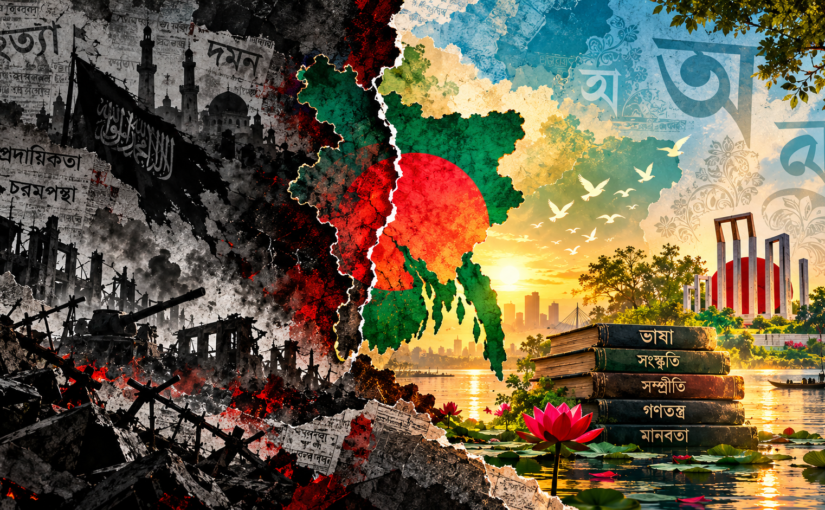
From Religious Nationalism to Ideological Persecution

More than five decades later, Bangladesh continues to confront fundamental questions about the relationship between religion, national identity and state authority. One of the most significant tensions lies between movements seeking to organise political and social life around restrictive interpretations of religion and those advocating an inclusive society based on equal citizenship, cultural freedom and respect for diversity.

This article argues that the persecution of progressive Muslims, secular intellectuals, religious minorities and advocates of equal rights must be understood within a longer historical struggle over the identity of Bangladesh. The conflict predates independence, acquired a particularly violent character during the 1971 genocide and continues to influence contemporary political and social relations.

The principal concern is not Islam as a religion. Rather, it is the political instrumentalisation of religious identity to justify exclusion, discrimination, intimidation and violence.

Two Competing Visions of Bangladesh

Contemporary Bangladesh contains diverse religious, cultural and political traditions. Nevertheless, two contrasting visions help explain an important dimension of its ideological tensions.

    The first is an exclusionary vision in which political authority, national belonging and social legitimacy are defined through a restrictive interpretation of religious identity. At its most extreme, this ideology seeks to suppress dissent, subordinate women’s rights, reject religious pluralism and impose religious conformity through coercion.

    Some violent extremist organisations regard alternative interpretations of Islam, secular political institutions and cultural practices associated with Bengali identity as threats to their ideological authority. Individuals who challenge these interpretations may be accused of apostasy, atheism or hostility towards religion.

    The second vision is founded upon an inclusive understanding of citizenship. It encompasses progressive and moderate Muslims, secular thinkers, religious minorities, Indigenous peoples and other communities committed to coexistence and fundamental rights.

    An important element of this second vision is the identity of the peaceful, progressive Muslim.

    Such an individual may practise Islam, maintain strong religious convictions and respect Islamic traditions while supporting democracy, freedom of expression, women’s equality, cultural pluralism and the rights of other religious and minority communities.

    Religious devotion and progressive social values are not inherently incompatible. Indeed, Bangladesh’s history contains numerous examples of Muslims who have defended Bengali language, literature, secular political institutions and inter-religious solidarity.

    The distinction is therefore not between Muslims and non-Muslims, or between religion and irreligion. It concerns the political use of religious authority and the extent to which individuals are permitted to exercise their fundamental rights without coercion.

    These visions should not be treated as two homogeneous populations. Religious conservatism does not necessarily imply support for extremism, and political Islam encompasses movements with different objectives and methods. The critical dividing line emerges when ideological beliefs are used to justify violence, persecution and the denial of equal citizenship.

    The Historical Roots: Colonialism, Communal Politics and Partition

    The ideological conflicts visible in contemporary Bangladesh cannot be understood without examining the political transformations of British India.

      Before colonial rule, the Indian subcontinent experienced extended periods of cultural interaction among Hindu, Muslim, Buddhist and other communities. These relationships included cooperation, shared traditions, political competition and occasional religious conflict.

      British colonial administration introduced new forms of political representation, economic organisation and population classification that subsequently influenced communal identities.

      In Bengal, the Permanent Settlement of 1793 reshaped agrarian relationships and contributed to enduring inequalities between landlords and cultivators. These inequalities intersected with religious identity in complex ways, particularly in eastern Bengal (i.e., current Bangladesh), where many cultivators were Muslim.

      During the late nineteenth and early twentieth centuries, political mobilisation increasingly drew upon religious classifications. The Partition of Bengal in 1905, the emergence of separate electorates and the growth of competing nationalist movements contributed to the political institutionalisation of communal identities.

      The creation of Pakistan in 1947 represented a culmination of one influential strand of Muslim political nationalism. For many Bengali Muslims, Pakistan also represented the promise of political representation, economic opportunity and freedom from longstanding social inequalities.

      Yet the new state soon revealed a profound contradiction.

      Pakistan had been established in the name of Muslim political unity, but that shared religious identity did not guarantee political equality, cultural recognition or equitable access to state resources.

      This contradiction became central to the subsequent history of East Pakistan.

      From Religious Unity to Internal Domination: Pakistan, 1947–1971

      Between 1947 and 1971, successive Pakistani governments faced growing opposition in East Pakistan over language, political representation, economic inequality and regional autonomy.

        The attempt to establish Urdu as the principal symbol of Pakistani national unity was particularly significant. For Bengali-speaking citizens, the marginalisation of their mother tongue represented an attack on cultural recognition and political equality.

        The Language Movement of 1952 demonstrated that Bengali Muslims could defend their linguistic and cultural identity while remaining committed to their religion.

        This development exposed a fundamental weakness in the assumption that a shared religious identity could override cultural and regional differences.

        Over the following two decades, economic disparities, unequal political representation, military dominance and restrictions on democratic participation intensified grievances in East Pakistan.

        The refusal to transfer political power following the 1970 general election transformed these longstanding tensions into a constitutional and political crisis.

        A particularly important feature of the conflict was the attempt by sections of the Pakistani political and military establishment to represent Bengali nationalism as religiously suspect or influenced by India and Hindu culture.

        Such accusations provided an ideological justification for treating demands for linguistic rights, regional autonomy and democratic representation as threats to the Pakistani state.

        The central contradiction was that Bengali Muslims were increasingly marginalised by a state created in the name of protecting Muslim political rights.

        Their religious identity did not protect them from discrimination, repression or mass violence.

        The 1971 Genocide: When Religion Became an Instrument of Political Violence

        The military crackdown launched on 25 March 1971 initiated a campaign of widespread atrocities in East Pakistan.

          The Pakistan Army and its local collaborators committed mass killings, sexual violence, forced displacement and attacks on civilian communities. Hindus were particularly vulnerable to targeted persecution, while Bengali nationalists, intellectuals, students and supporters of independence were also attacked.

          Bangladesh’s official account estimates that three million people were killed during the Liberation War. The atrocities resulted in enormous human suffering, including the displacement of millions, the destruction of communities and the long-term consequences of wartime sexual violence.

          Religious rhetoric played an important role in the ideological justification of the military campaign. Bengali nationalism was at times portrayed as a threat to Pakistan’s Islamic identity, while independence supporters were characterised as enemies of the state or religion.

          Local collaborationist organisations and militias participated in atrocities alongside the Pakistan Army. Responsibility must, however, be established through evidence concerning particular organisations and individuals rather than assigned collectively to entire religious, political or Urdu-speaking Bihari communities. The genocide demonstrated how religious identity could be manipulated to legitimise violence against people who shared the same faith as many of their persecutors.

          At the same time, the conflict cannot be reduced to a religious war. The struggle for Bangladesh involved national self-determination, democratic legitimacy, cultural recognition, economic justice and resistance to military dictatorship.

          Its significance lies partly in the fact that large numbers of Bengali Muslims rejected a political system that sought to subordinate their linguistic and national identity to an imposed conception of religious unity.

          The Liberation War therefore challenged a coercive form of religious nationalism without rejecting Islam itself.

          Progressive Muslims as Targets of Ideological Persecution

          A recurring feature of extremist movements is the attempt to monopolise the interpretation of religious identity. Where such movements gain influence, disagreement may become more than an intellectual or political difference. It may be portrayed as evidence that a person has abandoned their faith or betrayed their community.

            Accusations such as kafir (unbeliever), murtad (apostate) and nastik (atheist) can become particularly dangerous when employed to legitimise intimidation or physical violence.

            In Bangladesh, progressive Muslim writers, secular intellectuals, cultural activists and defenders of religious freedom have faced threats and attacks from extremist actors. The implications extend beyond freedom of expression.

            When an individual is threatened for supporting women’s education, cultural diversity, freedom of thought or the rights of religious minorities, the intimidation sends a broader message to society: alternative ways of understanding religion and citizenship may carry serious personal consequences.

            Such persecution can create an environment of fear in which people censor their opinions, withdraw from public life or leave their communities. It can also weaken the institutions necessary for pluralistic democracy, including universities, independent media, cultural organisations and civil society.

            This raises an important question: what happens when a religious majority contains individuals whose interpretation of religion is rejected by powerful extremist groups?

            Their shared religious identity may offer little protection when ideological conformity becomes the principal condition for social acceptance. Consequently, progressive Muslims can become targets of religiously framed persecution while remaining practising members of the same faith.

            Women, Religious Minorities and Indigenous Communities

            The consequences of religious extremism are not distributed equally. Women and girls may face disproportionate restrictions on education, employment, mobility, political participation and bodily autonomy.

              Religious minorities may experience intimidation, attacks on places of worship, property destruction and pressure to conform to majority practices.

              Indigenous peoples and ethnic minorities may experience intersecting forms of discrimination associated with religion, ethnicity, language and territorial rights.

              The rights of these communities are not peripheral to Bangladesh’s national identity. They are central to its democratic legitimacy.

              The principles underlying the independence movement cannot be adequately understood if equality is restricted to members of a single religious or ethnic majority.

              An inclusive interpretation of liberation requires recognition that Hindus, Muslims, Buddhists, Christians, Indigenous communities and people without religious beliefs possess equal claims to dignity, security and citizenship.

              The treatment of women and minorities therefore provides an important measure of the distance between the aspirations associated with independence and the lived realities of contemporary society.

              Contemporary Bangladesh: Warning Signs and the Risk of Mass Atrocities

              Recent developments have renewed concerns about religiously motivated intimidation, mob violence and the security of vulnerable communities.

                Human Rights Watch documented increased mob violence during 2025, including attacks affecting women, religious minorities and political opponents. Its 2026 reporting also described opposition by religious hardliners to proposed reforms intended to strengthen women’s rights. The United States Commission on International Religious Freedom has similarly raised concerns about persistent tensions involving religious freedom and the protection of minority communities.

                These developments must be examined alongside other sources of political violence, including partisan retaliation, abuses by state institutions and longstanding weaknesses in accountability.

                The question is whether recurring attacks, discriminatory rhetoric and the normalisation of coercion may create conditions conducive to further mass atrocities.

                Historical experience demonstrates that atrocities do not necessarily begin with organised mass killing. They may be preceded by processes of dehumanisation, discrimination, institutional exclusion and the systematic removal of safeguards against violence. However, the presence of such warning signs does not establish that genocide is already occurring.

                Under the 1948 Genocide Convention, genocide requires particular prohibited acts committed with the specific intent to destroy, in whole or in part, a national, ethnic, racial or religious group. Political and ideological groups are not independently protected categories under that definition.

                Consequently, violence against progressive Muslims, secular activists or political opponents cannot automatically be categorised as genocide merely because it is severe or systematic.

                Depending on the evidence, such acts may constitute persecution, terrorism, other serious human rights violations or crimes against humanity. Where perpetrators target a protected group with the required intent, the legal definition of genocide may become relevant.

                International Networks, Extremism and the Wider Consequences for Muslims

                Religious extremism cannot be understood exclusively within national borders.

                  Ideological movements may circulate through international religious institutions, political networks, digital communication platforms and transnational organisations.

                  In some circumstances, extremist groups obtain financial, logistical or ideological support beyond their home countries.

                  Nevertheless, allegations concerning foreign sponsorship or organised international assistance require specific evidence. Shared ideology alone does not establish operational collaboration.

                  Extremist violence also creates consequences for Muslim populations internationally.

                  The actions of violent organisations are sometimes generalised to Muslims as a whole, contributing to prejudice, discrimination and restrictions that may disproportionately affect peaceful believers.

                  This creates a damaging cycle. Extremist movements claim exclusive authority to represent Islam, while anti-Muslim prejudice treats those movements as representative of the wider religion.

                  Both positions disregard the diversity of Muslim thought and practice.

                  Bangladesh’s progressive Muslim traditions provide an important counterexample to the assumption that religious observance is incompatible with pluralism and equal rights.

                  The protection of these traditions should therefore be understood as part of the wider defence of religious freedom.

                  Is the Ideological Conflict of 1971 Returning?

                  The relationship between the 1971 genocide and contemporary Bangladesh should be approached through historical comparison rather than the assumption of direct repetition.

                    There are identifiable similarities in certain forms of political rhetoric, particularly accusations that cultural pluralism, secularism or Bengali nationalism represent hostility towards Islam.

                    There are also major differences in political institutions, military organisation, international circumstances and the scale and nature of violence.

                    The historical question is therefore not whether present-day Bangladesh is experiencing an exact repetition of 1971.

                    Rather, it is whether the mechanisms that once enabled persecution, including religious exclusion, political dehumanisation, institutional impunity and the legitimisation of violence against perceived enemies, are again becoming influential.

                    Such a comparison offers an opportunity to identify warning signs before they develop into more systematic violence.

                    The memory of 1971 should serve as a foundation for prevention rather than a justification for collective suspicion or retaliation.

                    Religious belief, conservative political preferences and support for religiously informed legislation do not, by themselves, establish involvement in extremism. The decisive concerns arise when individuals or organisations endorse coercion, deny fundamental rights or participate in violence.

                    A society committed to preventing atrocities must safeguard peaceful disagreement while holding perpetrators of violence accountable.

                    The Unfinished Meaning of Liberation

                    The independence of Bangladesh was achieved through extraordinary human sacrifice. Its historical significance extends beyond territorial sovereignty.

                      The Liberation War challenged a political order that denied the legitimacy of Bengali linguistic, cultural and democratic aspirations. It also demonstrated that religious identity could not legitimately be used to erase the rights of a national community.

                      That historical lesson remains relevant.

                      A Muslim citizen should not be forced to choose between religious devotion and Bengali cultural identity. A woman should not have to surrender her autonomy to demonstrate religious commitment. A Hindu, Buddhist, Christian or Indigenous citizen should not have to negotiate their equal rights on the basis of majority approval.

                      The protection of these principles requires accountable institutions, independent courts, freedom of expression, effective safeguards for minorities and consistent opposition to political violence.

                      It also requires confronting the historical and contemporary misuse of religion without stigmatising religious communities.

                      The strongest response to extremism is not the exclusion of those who hold different beliefs. It is the defence of a constitutional order in which disagreement remains peaceful and every citizen enjoys equal protection.

                      Conclusion: Liberation Must Protect Everyone

                      The central lesson of 1971 is that a state cannot secure legitimate political unity merely by invoking a common religion. Political authority must also respect language, culture, democratic representation and fundamental human rights.

                      The persecution of progressive Muslims, secular intellectuals, women, religious minorities and Indigenous communities raises serious questions about how fully these principles have been realised in Bangladesh.

                      Religious extremism becomes particularly dangerous when it transforms ideological disagreement into accusations of betrayal, treats cultural difference as a threat and presents violence as a legitimate instrument of social control.

                      The danger is not confined to any single religious community. It concerns the erosion of institutions and social norms that protect human dignity.

                      Understanding the historical relationship between religious nationalism, the 1971 genocide and contemporary ideological persecution is therefore essential to preventing future atrocities.

                      The unfinished struggle of 1971 is not a struggle against religion. It is a continuing struggle against the use of religious and political authority to deny the humanity, freedom and equal citizenship of others.

                      A Bangladesh faithful to the broader promise of liberation must remain a country in which peaceful Muslims of different traditions, Hindus, Buddhists, Christians, Indigenous peoples and citizens of every belief can live without fear.

                      That is the meaning of an independence worth preserving.
                      Panchgaon Genocide, Moulvibazar

                      Panchgaon Genocide (পাচঁগাওঁ গণহত্যা) is a volume in the Genocide-Torture Index series, written by Tapan Palit (Jagannath University, Department of History) and published in March 2015 by the 1971: Genocide-Torture Archive & Museum Trust. The book explains its documentary purpose clearly: to preserve place-based evidence of killings, mass graves, and survivor memory that have often been marginalised in mainstream histories, thereby weakening denial and minimisation.

                      The report centres on Panchgaon village in Rajnagar Upazila, Moulvibazar, describing it as a predominantly Hindu rural community that became acutely vulnerable once Pakistani forces entered the wider area in late March 1971 and local collaborator structures expanded. It describes how intimidation, organised robbery, and the formation of “peace committee” and Razakar networks created a climate of fear and displacement even before the major massacre, and how refugees from nearby towns sought temporary shelter in Panchgaon, believing it to be safer than the urban centres.

                      The book’s core narrative concerns the massacre of 7 May 1971. It states that in the early hours, around 50–60 Pakistani soldiers entered Panchgaon accompanied by local Razakars, after planning reportedly carried out at the house of a leading collaborator, Alauddin Chowdhury. The attack is described as coordinated and multi-modal: widespread arson, looting, and sexual violence were carried out alongside the rounding up of villagers, with houses set alight and families forced into flight amid systematic intimidation.

                      A particularly harrowing element of the report is its account of how people were gathered at Hirun Babu’s pond, then bound and killed. The text describes victims being tied together and thrown into the water, followed by gunfire directed at those struggling, and the pond water turning red with blood while bodies floated “like water hyacinth/কচুরিপানা”. It further states that after the attackers left, local people recovered bodies using nets and buried them in a mass grave on the western bank of the pond, emphasising that families were often unable to perform normal funeral rites due to fear of renewed attacks.

                      On numbers, the report is careful to show that casualty estimation is contested in local memory and published accounts. It notes that some sources mention 59 named victims, while others cite 69 or 73, and the author concludes that the total number killed in Panchgaon during the nine months of 1971 was “more than one hundred”, although not all names and identities can be recovered. The book also records abductions: it states that 14 people were taken away from the village and their whereabouts remain unknown.

                      The perpetrators are presented as a combined apparatus of occupation violence: the Pakistan Army as the primary killing force, with local collaborators operating as facilitators and co-perpetrators through identification, guiding troops, and participating in arson, rape, and looting. The report names Alauddin Chowdhury as a principal local organiser and lists additional collaborators and peace committee figures, illustrating how genocidal violence at village scale depended on local networks, not only external troops.

                      The genocide linkage the book makes is essentially about patterned civilian targeting and group-destructive intent. It portrays Panchgaon as targeted not because it was a battlefield, but because it was a community marked as politically and religiously “suspect”, with violence designed to destroy safety, property, dignity, and the possibility of remaining in place. By documenting the killing method, the disposal of bodies, the mass grave, the contested but substantial death toll, and the role of collaborator structures, Panchgaon Genocide functions as a micro-history of the wider 1971 Bangladesh Genocide, showing how large processes of extermination and persecution were enacted through local geography and local complicity.

                      Rape as a Weapon of Genocide in Bangladesh in 1971

                      What Geoffrey Davis’s report reveals

                      The 1971 Bangladesh genocide is often remembered through mass killing, political repression, and the destruction of villages and towns. Yet Geoffrey Davis’s report, The Changing Face of Genocide: Bangladesh, 1971-72, draws attention to another central dimension of the atrocities: the large-scale rape of women and girls and its devastating aftermath. Based on his direct involvement in the post-war abortion programme in Bangladesh, Davis argued that rape was not simply an incidental crime of war. In his view, it formed part of a broader pattern of violence used to terrorise, humiliate, and break Bengali society.

                      Who was the author and what was his role?

                      Within the article, Geoffrey Davis presents himself not primarily as a historian or political commentator, but as a medical practitioner directly involved in the post-war response to rape-related pregnancies in Bangladesh. He explicitly states that his briefing in England was that approximately 200,000 unwanted pregnancies were thought to exist in Bangladesh in March 1972, that a clinic had begun operating in Dhaka, and that his own role was “to instruct all interested parties in practical methods for the termination of advanced pregnancy.” This makes clear that he was writing as an external medical actor involved in the abortion and rehabilitation response after the war. His perspective is therefore both immediate and interventionist. He was not a detached observer. He was someone participating in the post-war programme and reporting on what he encountered.

                      What does the report claim?

                      The central claim of the report is that rape during the 1971 Bangladesh war was not random or incidental, but was part of a wider strategy of domination and destruction. Davis opens with a stark assertion that part of the overall plan for the subjugation of Bangladesh involved an order to the West Pakistan army to impregnate as many Bengali women as possible in order to disrupt what he calls the “racial integrity” of Bengalis. He treats sexual violence not merely as wartime abuse, but as an organised political instrument. Later in the report, however, he qualifies this claim to some extent by stating that there was no direct evidence available to him that this policy had been formally dictated by the central Islamabad political or military command, though he refers to reports from Punjabi officers suggesting that it was policy handed down through military channels. This internal tension is important. The report strongly alleges systematic intent, but also acknowledges limits in documentary proof.

                      A second major claim is that rape created a national crisis of unwanted pregnancies after liberation. Davis argues that large numbers of girls and women, including very young teenagers, were left pregnant as a result of wartime sexual violence. He presents the abortion programme as an emergency response to this crisis. He further claims that the official programme only captured a small share of the actual problem because most women had already sought abortions through informal village practitioners, local healers, or dangerous self-induced methods before formal services became available.

                      A third major claim is that rape in 1971 had consequences that extended far beyond the immediate assault. The report links wartime rape to suicide, social exclusion, venereal disease, gynaecological injuries, pelvic infections, and long-term bodily damage. Davis therefore advances a broader understanding of genocide, one in which mass atrocity also operates through reproductive violence, social dishonour, and the destruction of the future health of a people.

                      Numbers and estimates presented in the report

                      The report contains several numerical estimates. The official figure for raped women, according to Davis, was 200,000. He explains that this figure was derived from an estimate that approximately two girls were reported missing per day in each Thana during the occupation, across about 480 thanas over roughly 270 days, producing a notional total of 268,200, later rounded down to 200,000. Davis himself argues that this was an underestimate. He says it excluded women taken from areas where families did not report the crime, women raped during transient military operations in villages, and women separated from refugee columns on the way to India.

                      He then advances a separate line of reasoning. Starting from a rough population estimate, he suggests that if one third of women of reproductive age in the affected population were raped, that alone could imply around 300,000 rape victims. He then combines this with his assumptions about women kept for repeated use and discarded once pregnant, eventually reaching a figure of 350,000 unwanted pregnancies by the end of December 1971. In another section, using district-level impressions, he says that a figure around 360,000 unwanted pregnancies would be “in fair agreement” with his earlier estimate. Later, he states that in his opinion the incidence of unwanted pregnancy at liberation was probably about right at 300,000 to 400,000, and that the vast majority of these had already been dealt with locally through indigenous abortion practices.

                      For officially performed terminations, Davis says he knew of approximately 800 terminations of pregnancy carried out through the formal programme across the country, mainly involving mid- and third-trimester pregnancies, with two unavoidable deaths. He contrasts this small number with the much larger scale of village abortions, which he places between 300,000 and 400,000. He also cites a small diagnostic sample from outside Dhaka in which 10 pregnant women were tested, of whom 6 had gonorrhoea and 4 had gonorrhoea plus a positive Wassermann reaction. From this he extrapolates a far wider venereal disease crisis.

                      What atrocities against women are described?

                      The report documents several forms of atrocity directed at women and girls.

                      First, it records repeated rape by soldiers and local collaborators. Davis cites contemporary press reports describing women taken from homes, refugee groups, and villages, and then raped by multiple soldiers. In one quoted case, a girl in a refugee camp recounts that her parents were killed and she was then raped by three men. In another, daughters were repeatedly raped in front of their father. In another, women between the ages of 12 and 35 in a village were reportedly all raped while men older than 12 were shot. The report also records that some women were taken for prostitution, held in camps, and allocated nightly to officials.

                      Second, the report describes prolonged captivity and repeated sexual exploitation. Davis claims that some women were kept for repeated use until they became pregnant or showed overt signs of venereal disease, at which point they were discarded if Bengali and killed if Hindu. This is one of the most severe claims in the report because it links rape to captivity, group targeting, bodily injury, pregnancy, and discriminatory killing.

                      Third, the report describes the aftermath of rape as another layer of violence. It refers to women cast out by families, women with physical injuries, women driven to suicide, and women left with long-term reproductive health complications after unsafe abortions. Davis says that by the time the formal programme began, many women had already undergone village abortions involving sharpened sticks, abortifacient roots, and improvised pharmacological methods. He presents these not as isolated medical incidents, but as part of the broader violence that rape had unleashed upon women’s bodies and lives.

                      Fourth, the report repeatedly notes that girls and young women were especially targeted. He refers to pregnant girls in their early teens, women aged 12 to 35 in one village case, and the high prevalence of untreated disease among young women. He also comments, in disturbing language, that the army targeted young attractive women.

                      Why does the report frame this as genocide?

                      Davis calls this “the changing face of genocide”. By this he means that genocide should not be understood only as direct mass killing. In his account, genocide also appears through sexual violence, forced pregnancy, reproductive harm, and the destruction of social and biological continuity. The report repeatedly connects rape with the subjugation of Bangladesh as a people, not merely with the abuse of individual women.

                      The genocidal dimension in the report rests on several linked ideas.

                      First, rape is presented as targeted violence against Bengali women as members of a collectivity. Davis does not depict these assaults as ordinary wartime indiscipline. He frames them as attacks on Bengali society through women’s bodies.

                      Second, the report suggests an intent to alter or violate communal continuity through forced impregnation. His opening claim is that Bengali women were to be impregnated systematically in order to damage the group’s integrity.

                      Third, rape is shown as part of a wider pattern of destruction. The same article that discusses sexual violence also refers to killings of students, engineers, doctors, and other perceived leaders, along with the deliberate crushing of the economic and social base of East Pakistan. In this wider setting, rape appears not as an isolated crime but as one instrument within a larger campaign of devastation.

                      Fourth, the report emphasises enduring group harm. Davis argues that the consequences of rape included unwanted pregnancies, unsafe abortions, venereal disease, pelvic infections, suicide, stigma, and long-term bodily damage among a large part of one generation of women. This is crucial to his genocide framing. The violence was not over when the shooting stopped. Its effects continued inside families, villages, and reproductive health for months and years afterwards.

                      How does rape link to genocide in this report?

                      Based on this report alone, rape is linked to genocide in four principal ways.

                      It is linked through intent, because the author claims that impregnation of Bengali women was pursued as part of the subjugation of Bangladesh.

                      It is linked through scale, because the report insists that rape was widespread and systematic, not episodic. The repeated use of large estimates is meant to establish that the phenomenon was massive and national in scope.

                      It is linked through group destruction, because the victims are represented as Bengali women attacked precisely in their capacity as members of a targeted population. Their violation is treated as a way of terrorising families, dishonouring communities, and breaking the social future of the nation.

                      It is linked through aftermath, because the report presents the resulting pregnancies, disease, stigma, unsafe abortions, and suicides as part of the continuing destructive impact of the 1971 atrocities. Genocide, in this framing, is not confined to killing. It includes deep and lasting injury to the bodily and social reproduction of a people.

                      Concluding remarks

                      Taken on its own terms, Geoffrey Davis’s report presents rape in 1971 Bangladesh as a systematic and devastating instrument of violence directed against Bengali women and, through them, against Bengali society. It argues that wartime rape produced an immense crisis of unwanted pregnancies, led to widespread unsafe abortions, and left behind an entire landscape of trauma, disease, stigma, and reproductive injury. For Davis, this is why the violence should be understood as genocide. Its “changing face” lay in the fact that destruction was carried out not only by bullets and massacres, but also through women’s bodies, forced pregnancy, and the long afterlife of sexual violence in a shattered society.

                      Geoffrey Davis was an Australian medical doctor, best known in the early 1970s for his work in contraception, abortion services, and advanced pregnancy termination. Trained at the University of Sydney, he later practised in both Sydney and London, where he became associated with late-term abortion care and developed a technique for terminating advanced pregnancies. In 1972, during the immediate aftermath of the Bangladesh Liberation War, Davis travelled to war-ravaged Bangladesh and worked with the Bangladesh Women’s Rehabilitation Programme and international agencies to address pregnancies resulting from the mass rape of Bengali women and girls. His role involved performing abortions, training medical staff, and helping to organise emergency reproductive health services across the country. For this reason, he remains an important medical figure in discussions of wartime rape and its humanitarian aftermath in Bangladesh.

                      Source: Davis, G. (1973). The Changing Face of Genocide – Bangladesh, 1971-72: An account of the problems met during the post-war IPPF Abortion Programme. Proceedings of the Medical Association for the Prevention of War, Volume 2, Part 7, 173–187.

                      Hatia Genocide, Kurigram

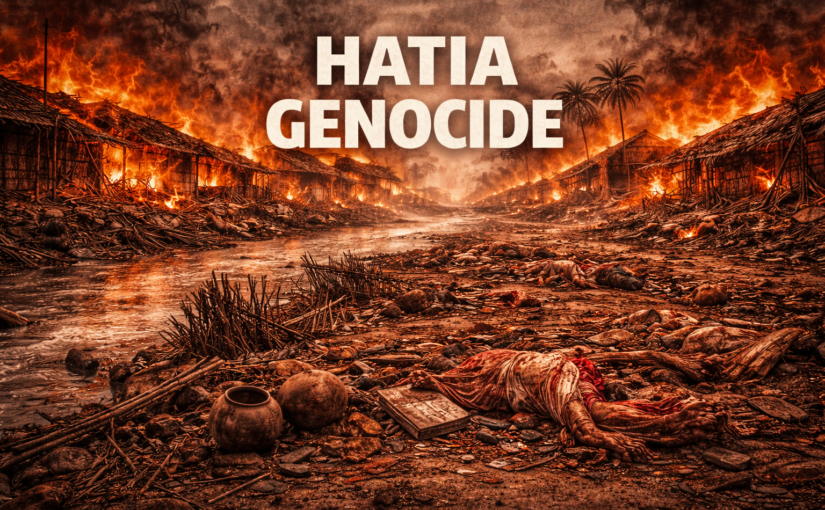
                      Hatia Genocide (Genocide-Torture Index series, Vol. 12) is written by Mitun Saha and published in March 2015 under the “1971: Genocide-Torture Archive & Museum Trust” in association with the Bangladesh History Congress. The book documents a large-scale massacre and associated atrocities carried out during the 1971 Liberation War, focusing on Hatia Union and neighbouring localities in Ulipur, Kurigram.

                      At the core of the account is the 13 November 1971 attack, described as a sustained operation lasting roughly ten hours, in which Pakistani forces and local collaborators (including Razakars) assaulted multiple villages, including Dagarkuti, Anantapur, Baguya, Ramkhana, Noyadora, Nilkantha, and nearby areas. Based on the information compiled in the book, at least 697 unarmed civilians were killed. The narrative further records severe brutality, including systematic torture and sexual violence against women, framed as widespread and repeated rather than incidental.

                      The book’s argument links these crimes to genocide by emphasising intent and pattern: the violence is presented as targeted against the local population because of its perceived alignment with Bengali nationalism and its support for the liberation struggle, with repression extending beyond battlefield confrontation into village life. It also notes how such attacks were enabled by collaboration networks that operated alongside the occupying forces, which is important for understanding how genocidal campaigns work at the local level, through identification, pursuit, and coordinated participation.

                      Finally, Hatia Genocide is also a critique of forgetting. It notes that, despite the scale of loss and the existence of mass killing sites across Bangladesh, many local genocidal episodes remain under-discussed in national narratives and mainstream documentation. By assembling place-based history, survivor and witness accounts, and named locations, the book positions Hatia not as an isolated tragedy, but as one documented example of a broader genocidal campaign carried out in 1971 by the Pakistan Army and its collaborators.

                      Pahartali Genocide, Chattogram

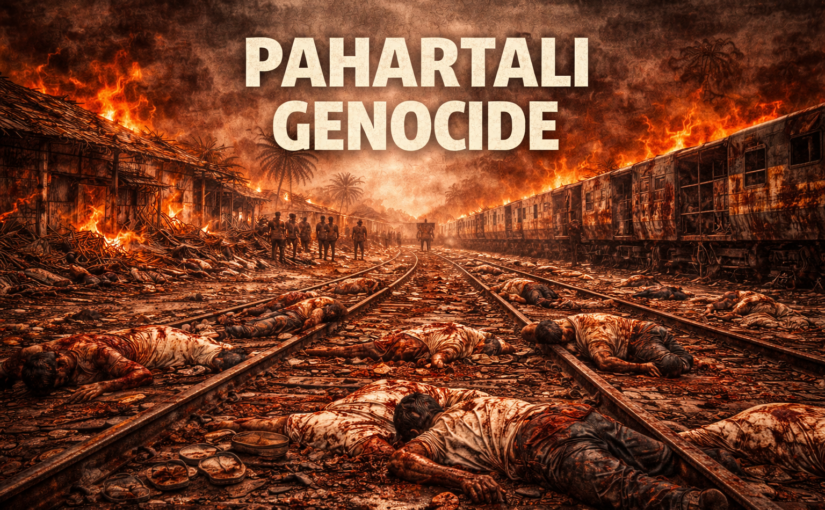
                      Pahartali Genocide (Genocide-Torture Index series, no. 9) is written by Chowdhury Shahid Kader and was published in December 2014 under the “1971: Genocide-Torture Archive & Museum Trust”, in association with the Bangladesh History Congress. The book reconstructs one of the most infamous killing grounds of 1971 in Pahartali, Chattogram, presenting Pahartali not as an isolated episode of wartime brutality, but as a concentrated site where occupation violence, local collaboration, and targeted destruction of Bengali lives converged.

                      The core claim is stark: around ten thousand people were killed in and around the Pahartali killing ground during the Liberation War period, with the book highlighting 10 November 1971 as a peak day of slaughter when around 400 people were killed. It describes how victims were seized from surrounding neighbourhoods and from trains passing through the area, then taken to the killing site. A significant portion of those targeted were ordinary civilians, including railway employees and residents of nearby railway colonies, which the book portrays as a deliberate strategy of terror designed to break Bengali community life and remove perceived “pro-liberation” social bases.

                      The narrative also documents sexual violence as an organised component of atrocity. It describes the occupation’s use of a seized building as a torture and detention centre where women were held and repeatedly raped, and it records the author’s estimate of around one thousand “Birangona” or War Heroines linked to the Pahartali atrocity landscape. This coupling of mass killing with gendered violence is presented not as incidental misconduct, but as part of an intentional pattern of domination and collective humiliation of Bengalis, with long after-effects for survivors and families.

                      In linking these events to genocide, the book’s reasoning is essentially about pattern and purpose: the violence is portrayed as planned, repeated, and systematic, facilitated by the Pakistani forces and enabled by local collaborators, with victims selected because they were part of the Bengali population and its social institutions in a strategically important urban-industrial zone. It also shows how memory and justice remain contested, noting struggles over protection of the killing ground and the politics of recognition, which the author frames as an extension of the harms inflicted in 1971 into the present.

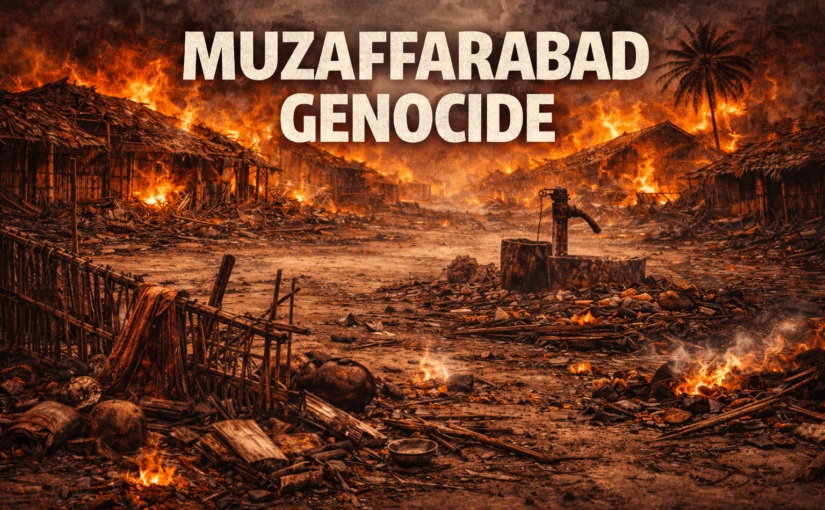
                      Muzaffarabad Genocide, Chattogram

                      Muzaffarabad Genocide was written by Chowdhury Shahid Kader and published in December 2014 as part of the series 1971: Genocide-Torture Directory (volume 4). It was produced under the umbrella of the 1971: Genocide-Torture Archive & Museum Trust, with series editorship credited to Professor Muntassir Mamoon.

                      The report documents the destruction of Muzaffarabad village (Patia Upazila, Chattogram), presenting it as an emblematic episode within the wider 1971 genocidal campaign. It describes Muzaffarabad as a highly educated, socially organised rural settlement that became militarily vulnerable after the Pakistani takeover of the broader Patia area in mid-April 1971. The narrative stresses how rumours and allegations were circulated to portray the village as a fortified base of resistance, which then served as a pretext for a punitive operation.

                      According to the text, on 3 May 1971 Pakistani forces, aided by local Razakar collaborators, surrounded Muzaffarabad and carried out an assault lasting roughly eight hours. The report states that approximately 300 villagers were killed, around 600 homes were set on fire, and approximately 200 women were subjected to sexual violence. It depicts killings as systematic and often intimate, including executions after people were dragged out from hiding places, alongside arson attacks that trapped families inside burning houses.

                      Critically, the report frames the violence as targeted group destruction rather than collateral damage. It notes that the village was predominantly Hindu (with only a very small number of Muslim households), and it repeatedly foregrounds how victim identification operated through religion and political labelling (“Hindu” and “Awami League supporter”) to justify murder, sexual violence, and dispossession. In that sense, the Muzaffarabad case is presented as a localised but structurally revealing instance of genocidal violence: central military force applied with local collaboration, driven by a logic of group elimination, terror, and the deliberate unmaking of community life through killing, rape, and mass arson.

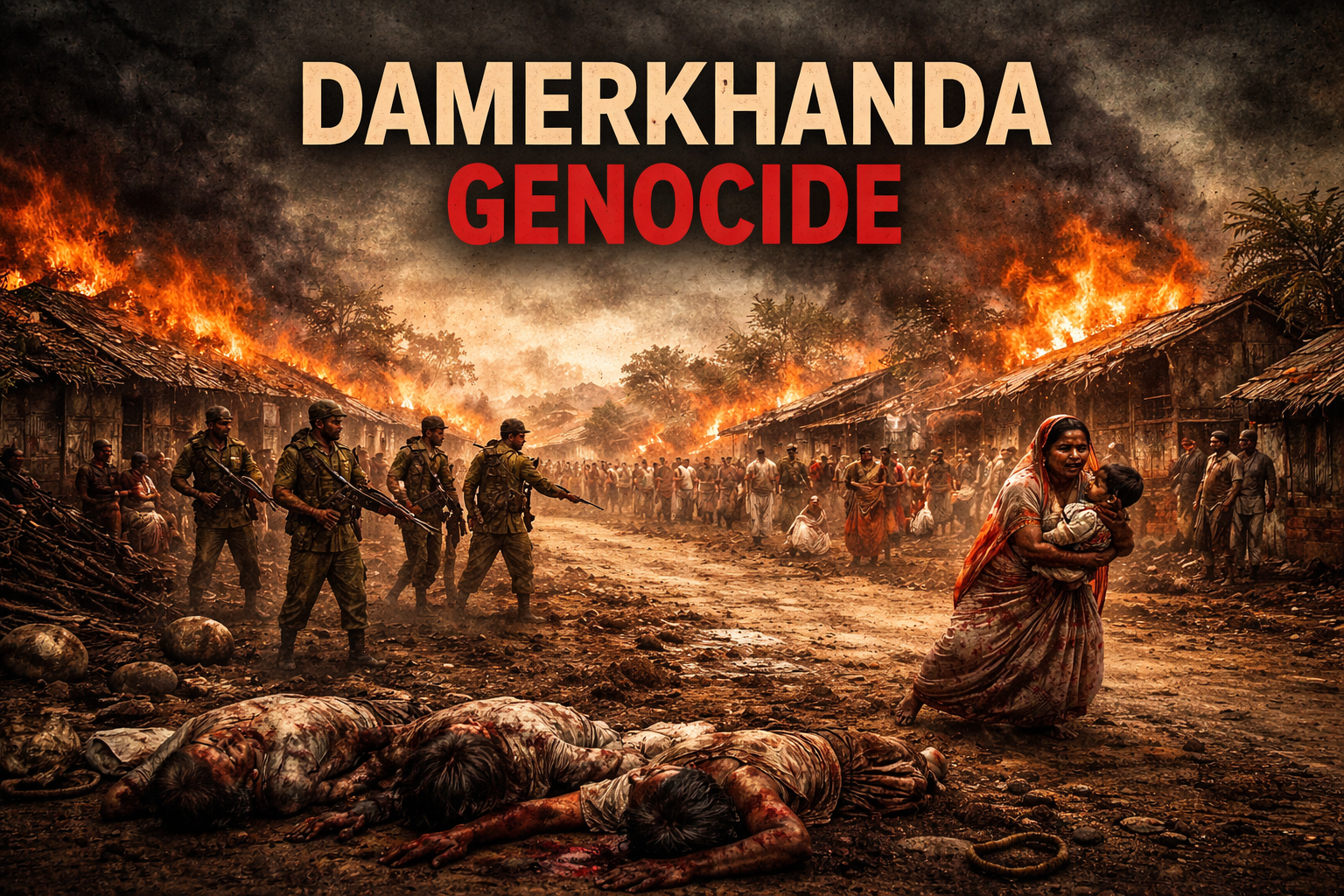
                      Damerkhanda Genocide, Bagerhat

                      Damerkhanda Genocide (দামেরখণ্ড গণহত্যা) is a short documentary monograph by Satyajit Roy Majumdar, published in the “1971: Genocide-Torture” book series (Vol. 1) by the 1971: Genocide-Torture Archive & Museum Trust in collaboration with the Bangladesh History Congress in December 2014.

                      Written for a general readership, the book reconstructs a largely under-documented local episode of the 1971 genocide in Damerkhanda village (Mongla area, Bagerhat) and nearby settlements. It explains why such localised histories matter: Bangladesh contains countless killing sites and mass graves, yet many incidents have remained absent from mainstream accounts, which in turn makes denial and minimisation easier. The author frames this work as part of a wider effort to preserve evidence, recover names, and record testimonies before they disappear.

                      At the core of the book is a detailed narrative of how, in late May 1971, collaborator forces (Razakar networks) attacked Damerkhanda and surrounding villages. The account describes systematic killing, arson, looting, and severe violence against women, with the book stating that roughly 300 displaced people had taken shelter in the area and that around 50 men and women were killed, while about 10–12 women were subjected to brutal torture and sexual violence. It also records how Hindu communities were especially targeted, reflecting a broader genocidal pattern in which religious identity was used to mark people for persecution and destruction.

                      The book further identifies alleged organisers and local facilitators, including a named Razakar commander, and documents the aftermath through victim lists, survivor accounts, and place-based detail about where violence occurred and how people tried to flee or hide. By grounding the genocide in one specific locality, Damerkhanda Genocide makes the devastation tangible: it shows how the Pakistan Army’s wider campaign depended on collaborators to extend violence into villages, destroy civilian life, and leave long-lasting trauma that survivors and families continue to carry.