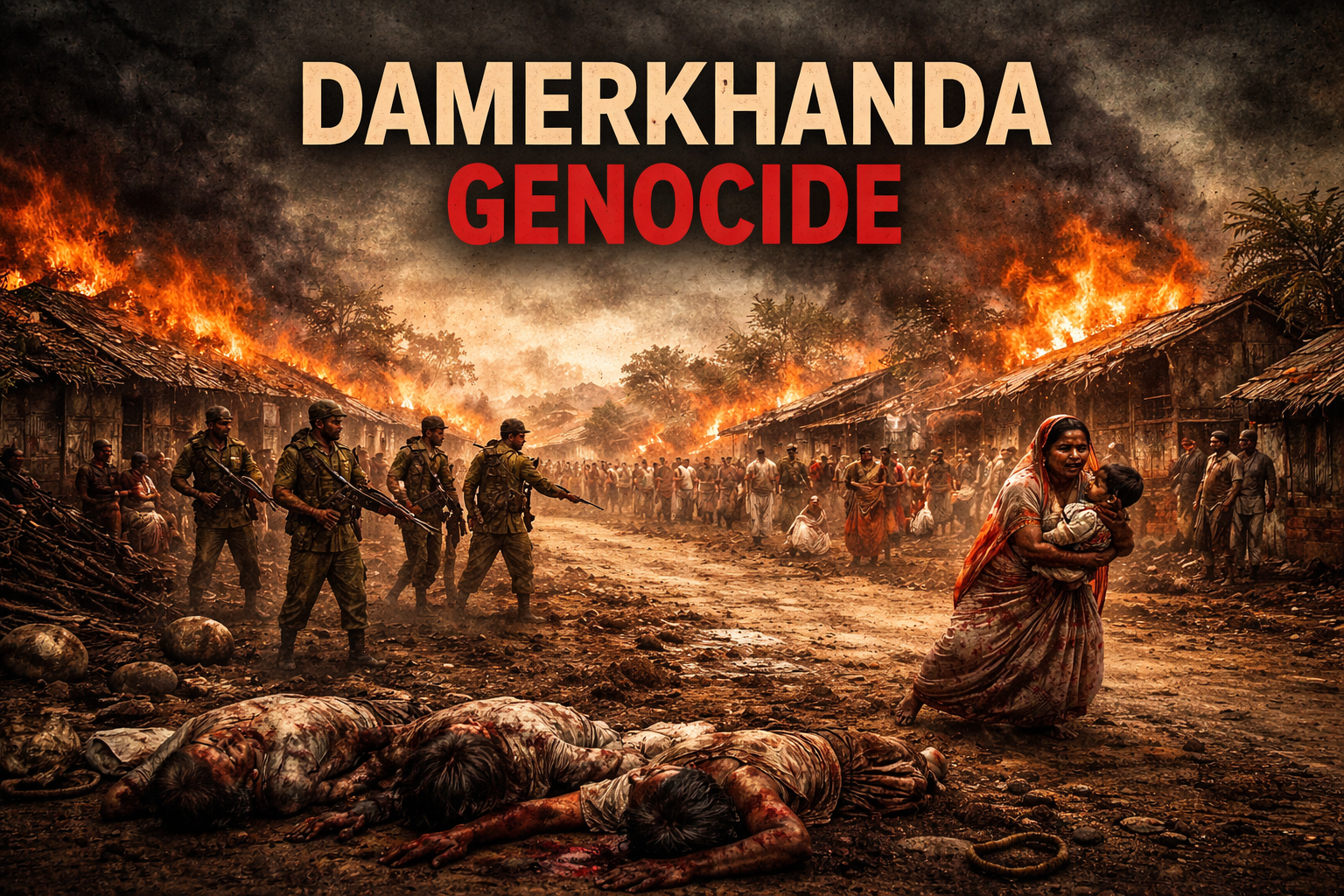
Damerkhanda Genocide (দামেরখণ্ড গণহত্যা) is a short documentary monograph by Satyajit Roy Majumdar, published in the “1971: Genocide-Torture” book series (Vol. 1) by the 1971: Genocide-Torture Archive & Museum Trust in collaboration with the Bangladesh History Congress in December 2014.
Written for a general readership, the book reconstructs a largely under-documented local episode of the 1971 genocide in Damerkhanda village (Mongla area, Bagerhat) and nearby settlements. It explains why such localised histories matter: Bangladesh contains countless killing sites and mass graves, yet many incidents have remained absent from mainstream accounts, which in turn makes denial and minimisation easier. The author frames this work as part of a wider effort to preserve evidence, recover names, and record testimonies before they disappear.
At the core of the book is a detailed narrative of how, in late May 1971, collaborator forces (Razakar networks) attacked Damerkhanda and surrounding villages. The account describes systematic killing, arson, looting, and severe violence against women, with the book stating that roughly 300 displaced people had taken shelter in the area and that around 50 men and women were killed, while about 10–12 women were subjected to brutal torture and sexual violence. It also records how Hindu communities were especially targeted, reflecting a broader genocidal pattern in which religious identity was used to mark people for persecution and destruction.
The book further identifies alleged organisers and local facilitators, including a named Razakar commander, and documents the aftermath through victim lists, survivor accounts, and place-based detail about where violence occurred and how people tried to flee or hide. By grounding the genocide in one specific locality, Damerkhanda Genocide makes the devastation tangible: it shows how the Pakistan Army’s wider campaign depended on collaborators to extend violence into villages, destroy civilian life, and leave long-lasting trauma that survivors and families continue to carry.